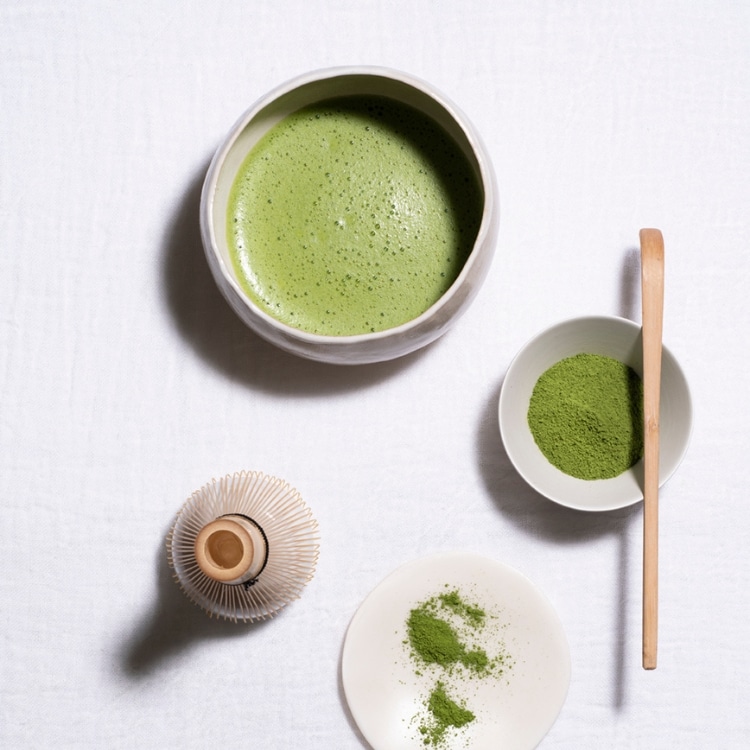
As you stroll through the streets of Kyoto, a scent gently tickles your nose. In a traditional house, a woman of rare elegance — dressed in a flowered kimono — prepares matcha for the tea ceremony, the Cha no Yu. Each of her gestures is precise, to prepare a drink with clean, soft notes. The attack is round, almost sweet, then leaves a very vegetal and floral imprint on the finish. It is produced from a single cultivar, Okumidori, which offers milky and vanilla nuances as well as a remarkable presence on the palate.
Originating in Japan, matcha means ground tea.
Three weeks before harvest, the tea bushes are covered and shaded.
It is thanks to this process that all the benefits of the tea are multiplied.
The tea leaf reacts to the shade by producing more chlorophyll and amino acids, including theanine: an active compound with relaxing effects that acts on stress as a calming agent.
After harvest, the tea leaves are briefly steamed to preserve the tea’s beautiful colour (a mark of quality) and prevent its oxidation.
Once the leaf is dried, it is then ground into powder. For great teas, this leaf is ground on a stone mill.
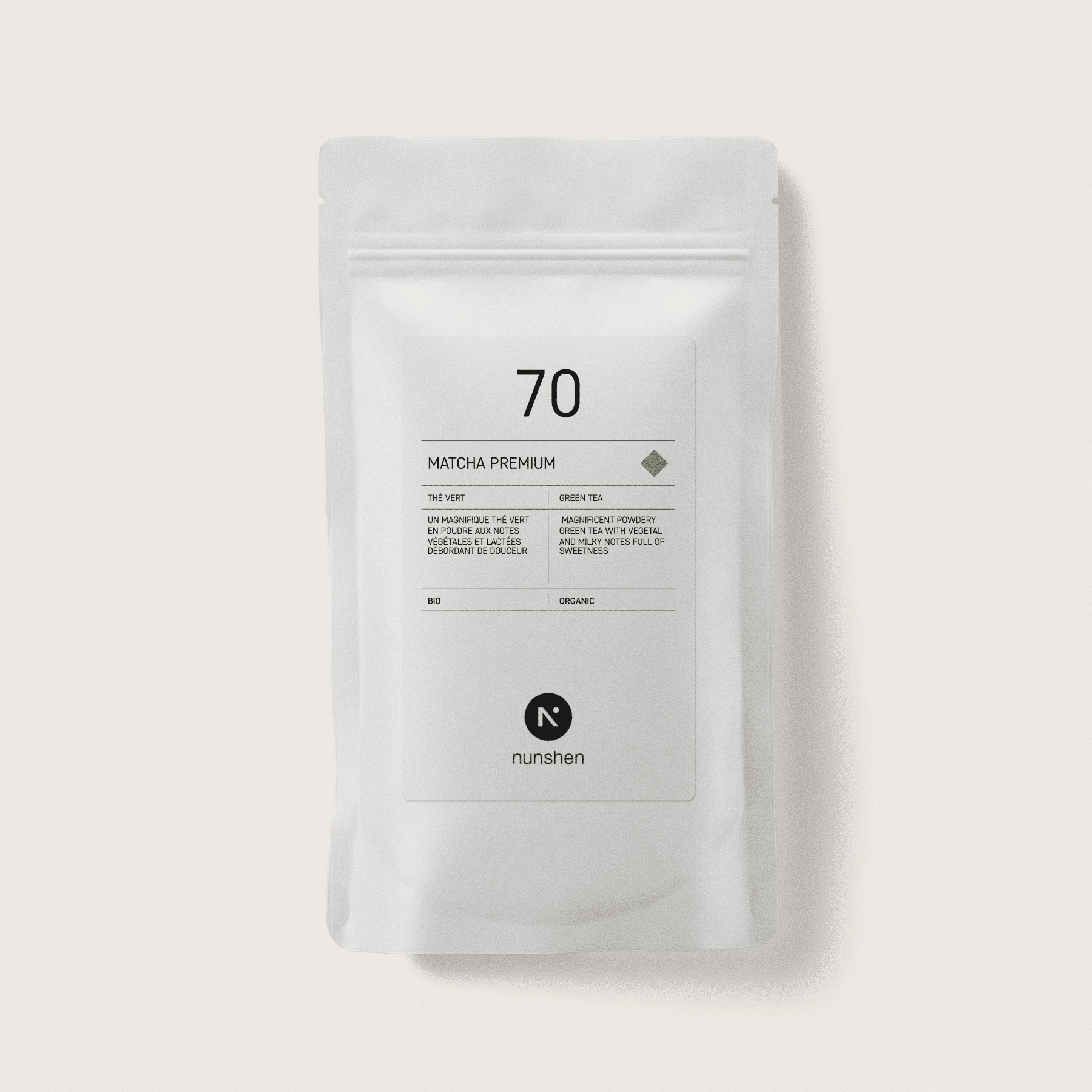
Such is the case with our tea No. 70 – Organic Matcha Premium.
As you taste this matcha, nunshen carries you to the heart of traditional Japan, where every cup tells a story of patience, respect and beauty. It is an invitation to slow down, to savour the moment and to appreciate the subtle nuances this exceptional tea has to offer. For those seeking an authentic experience, Matcha Premium is a true discovery, promising a deep immersion in the art of Japanese tea.
If you are looking for a matcha to use in cooking, we recommend turning to Yogashi Matcha, a powdered green tea from Japan offering intense vegetal notes and a lovely length on the palate.