
Free shipping on orders over €45
Our shop is open • 87 Rue Lemercier, Paris 17th
Free shipping on orders over €45
Our shop is open • 87 Rue Lemercier, Paris 17th
Free shipping on orders over €45
Our shop is open • 87 Rue Lemercier, Paris 17th
Free shipping on orders over €45
Our shop is open • 87 Rue Lemercier, Paris 17th
Matcha, a finely ground green tea powder, has a long history and a tradition deeply rooted in Japanese culture. Beyond its classic use in the tea ceremony, matcha in cooking has become a must in the world of contemporary gastronomy.
This drink has become very popular in the West. We can enjoy it on its own, but also, increasingly often, in gastronomy by incorporating it into many recipes.
In this article, Carine Baudry, Sourcing and Creation Director at nunshen, shares her expertise on the history and role of matcha in cooking.
Matcha 抹茶 means tea powder in Japanese. The particularity of matcha therefore comes from grinding the tea leaf into a powder to be consumed, then whisked with a bamboo whisk into hot water.
Matcha tea has a rich history in Japan, closely linked to culture, spirituality and Buddhist monks. The tea ceremony, or cha no yu, is much more than a simple tea tasting; it is steeped in rituals and traditions dating back centuries. The use of matcha in this ceremony reinforces its importance and its symbolism.
Samurai found in matcha a ritual conducive to concentration, meditation and mental preparation before combat. The practice of savouring a bowl of matcha before going into battle could symbolise the preparation to face uncertainty and adversity with calm and focus, as well as the acceptance of the possible outcome of the combat.
Matcha is originally a high-quality green tea. The tea plants are traditionally placed in the shade for several days in order to filter the light. The composition of the tea leaves is then modified to offer a tea with a greener colour, a lower tannin content and a greater richness in amino acids, giving the umami flavour.
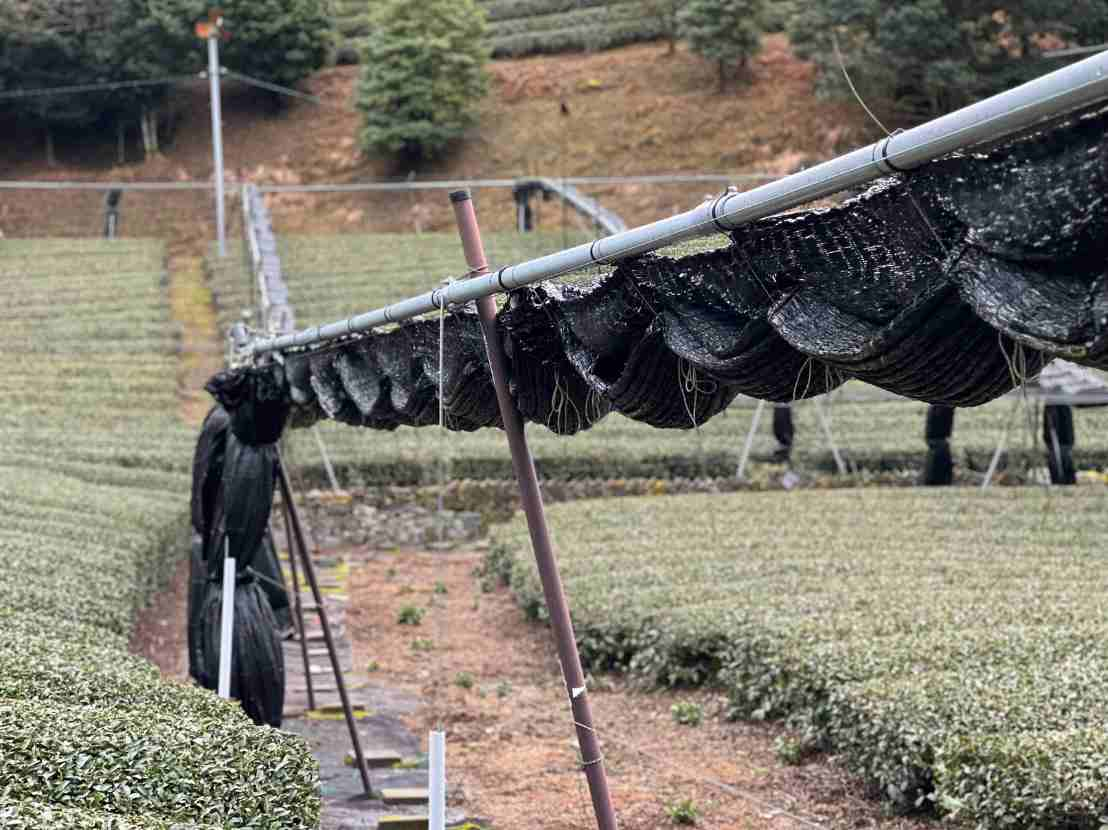
After steaming to fix the tea leaf and prevent any oxidation, the tea leaves are dried and then ground into a powder. Little by little, the consumption of this tea evolved in Japan.
The explosion in the popularity of matcha has led to a diversification of the qualities available on the market. As mentioned, several factors influence the quality and price of matcha, giving a varied range of products suited to different needs and preferences in the world of gastronomy.
The quality of matcha and its price depend on various parameters:
All these factors combined contribute to the diversity of matcha qualities available on the market, with options ranging from high-quality ceremonial matcha, intended to be enjoyed on its own, to more affordable culinary matcha, suited to cooking and drinks. As a general rule, the higher the quality of the matcha, the higher its price, due to the additional work and care required for its production.
Over time, matcha spread into Japanese cuisine, including pastries.
Pastry chefs began experimenting with matcha to create unique desserts, such as the famous matcha mochi, matcha dorayaki (Japanese pancakes), biscuits, cakes and matcha ice creams.
Today, matcha is recognised as a distinct ingredient and flavour, sought after around the world.
Determining how you are going to use matcha will help you choose the right type according to its quality, flavour and price. For more refined tasting experiences, opt for higher grades, while more practical uses such as cooking can benefit from more robust and less expensive matchas that will bring power and better resistance to the heat of cooking.
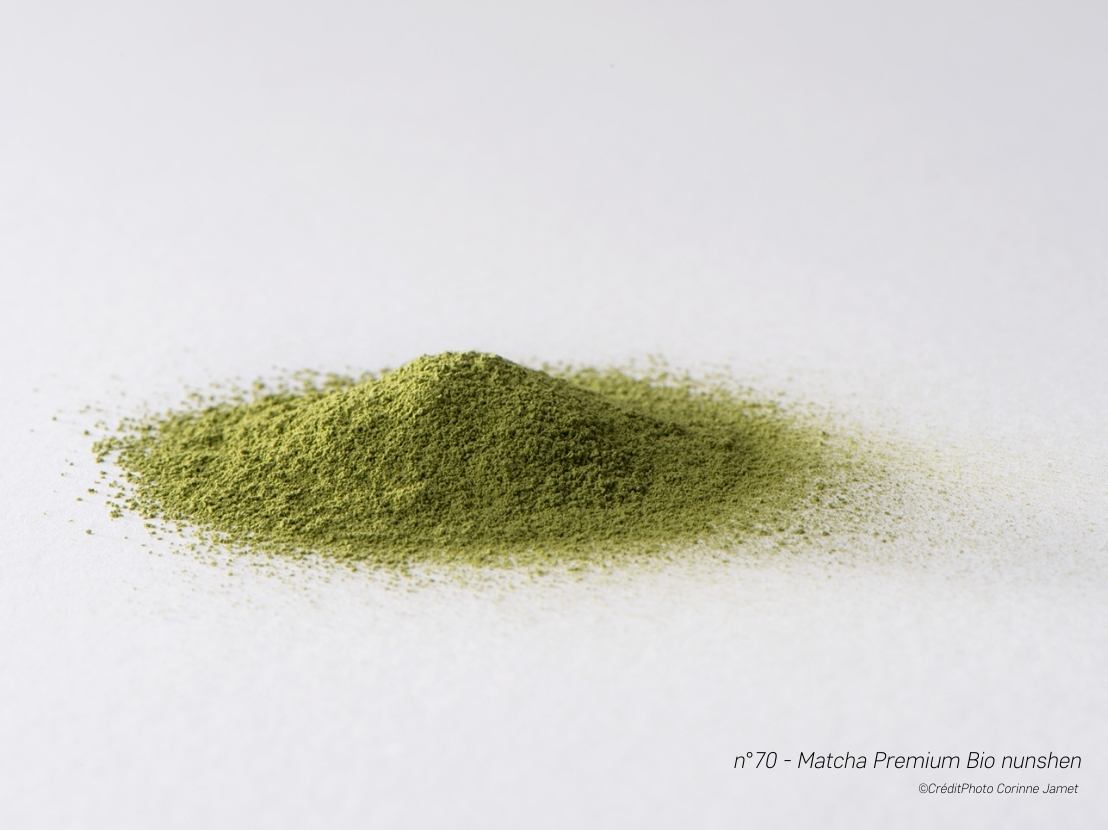
Indeed, if you are looking for a matcha to enjoy on its own, whisked in water, hot or cold, it is best to opt for a quality matcha: a so-called premium matcha such as the n°70 – Matcha Premium Bio from nunshen.
This matcha comes from a single cultivar, okumidori, and comes only from the first harvest of the year, a period when the young leaves are very concentrated and tender. For this quality of matcha, the tea plants were placed in the shade for 3 weeks before being harvested. After a few seconds of steaming, the following steps seek to progressively eliminate the water content to arrive at a dried leaf. The green colour is very intense. This richness and this colour are preserved thanks to an extremely meticulous and slow grinding with a stone mill. The time it takes to grind 1 kilo of matcha is very long.
The attention paid to these teas throughout the whole process of cultivation, harvesting and processing, the rarity and the time spent make these qualities of matcha more expensive but also much finer and more elegant in the cup.
This matcha can also be used for a matcha latte. Its softness and its intense green colour will give you a quality matcha latte.
If you are looking for a matcha to incorporate into recipes, both sweet and savoury, notably those subject to cooking, you can opt for a more accessible matcha. The n°701 – Yogashi Bio nunshen matcha is perfectly suited. It comes from a blend of different spring and summer harvests, as well as a sumptuous blend of shade-grown and light-grown tea. This blend keeps a lovely power on the palate and significantly minimises the price. Its colour is less intense than our premium matcha, but it remains marked, a guarantee of the Yogashi Matcha’s quality.
Let yourself be seduced by nunshen’s two matchas by exploring them on their own and/or with the sumptuous recipes we offer you: