
Free shipping on orders over €45
Our shop is open • 87 Rue Lemercier, Paris 17th
Free shipping on orders over €45
Our shop is open • 87 Rue Lemercier, Paris 17th
Free shipping on orders over €45
Our shop is open • 87 Rue Lemercier, Paris 17th
Free shipping on orders over €45
Our shop is open • 87 Rue Lemercier, Paris 17th
Discover the story of our osmanthus oolong tea
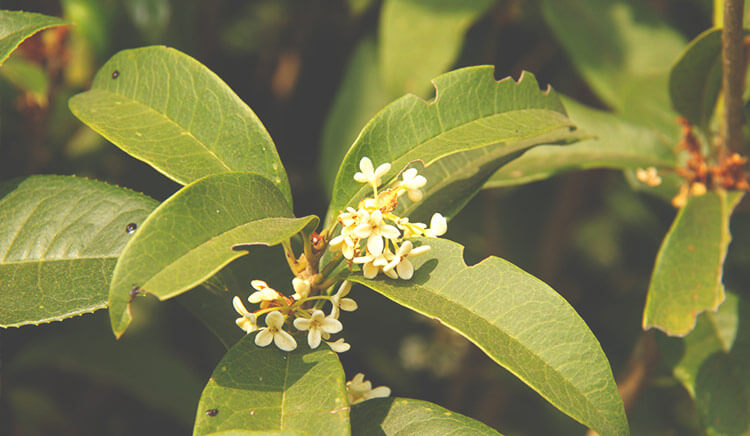
Osmanthus is a tree also called the “fragrant olive”. It has small, wonderfully scented flowers. The Chinese name for Osmanthus is Gui Hua. You will sometimes find osmanthus tea under the Chinese name Gui Hua Cha. Osmanthus is found in Asia, from the eastern Himalayas to Japan, by way of China, where it grows mainly in the Guangxi province, in Guilin. Guilin actually means “the Osmanthus forest”. Its flower is most often used dried, in jam or syrup. It is a condiment present in Asia, particularly for desserts.
Osmanthus is also precious for the extract of its flower, a precious fragrant raw material for perfumery.
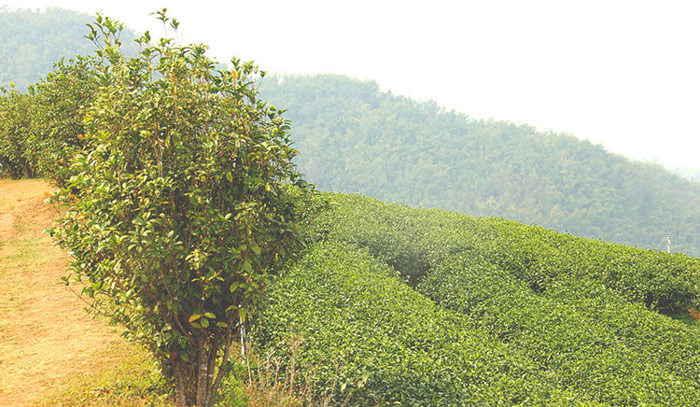
At the very north of Thailand, close to the border of Laos and Burma, is an area around the village of Mae Salong where tea is grown. The majority of the teas produced are oolongs, close to Taiwanese oolongs.
En février dernier, quand je me promenais dans les plantations de thé de cette région avec Rungrog, le producteur, j’ai eu l’émotion de sentir sur le chemin cette odeur très fruitée, abricot, pêche, miellées avec des touches légèrement animales, cuir. Une odeur chaude, riche, sensuelle, …un enchantement. Cette odeur était non seulement magique par son élégance et sa puissance mais aussi pour ce qu’elle m’évoquait, un souvenir très précis d’un très beau pot en porcelaine offert il y a bien longtemps par un fournisseur de matière première odorante lors de mes débuts dans le monde des arômes et des parfums. Ce pot sentait divinement bon. Ce fournisseur m’expliqua, à l’époque, que ces pots servaient à transporter de l’absolue d’Osmanthus (l’absolue est un extrait naturel). L’odeur d’osmanthus était toujours restée bien présente dans ma mémoire sans pour autant lui associer l’arbre et la fleur fraiche.
What joy when I magically found myself surrounded not only by tea plants (that’s already incredible!) but also by Osmanthus. Rungrog then told me that they produce the famous osmanthus tea. What happiness! After tasting several osmanthus teas, I selected the most balanced.
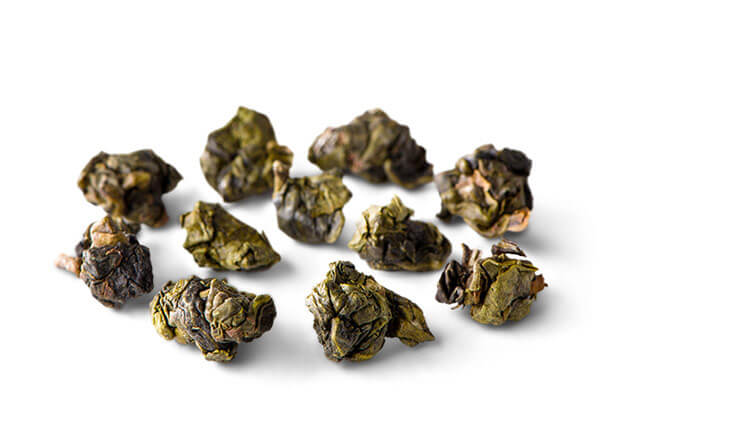
The tea is an oolong with a medium oxidation rate.
As a reminder, the main processing stages of this oolong are: withering, sweating/oxidation, fixing at high temperature, rolling, drying.
The Osmanthus flowers, freshly picked from the trees near the tea plants, are first dried. They are then placed in the oven with the tea leaves for 3 hours. The flowers and the tea leaves are not mixed, but the aromas released by the flower will impregnate the tea during these hours of heating. A few dried flowers are then added at the end of the process.
The flower is powerful and the process makes it possible to optimise the scenting. 3.5kg of dried flowers are needed to perfume 20kg of oolong tea.
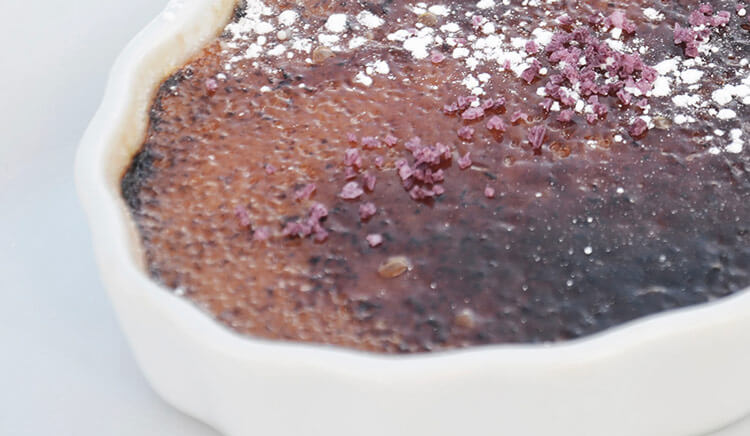
Recipe for 6 people
Preparation time: 20 minutes
Cooking time: 60 minutes
Ingredients
½ litre of single cream
½ litre of milk
10 egg yolks
80 g of brown sugar
80g of white sugar
10g of our 128 – Osmanthus Oolong
Preparation:
Heat the milk and the cream in a saucepan. When the mixture is boiling, add the tea then leave to infuse off the heat, covered, for about 7 minutes. Filter and leave to cool.
Meanwhile, whisk the egg yolks with the brown sugar until you obtain a smooth mixture. Then pour in the warm or cold tea cream. Whisk. Place the mixture in ramekins, bake in the oven at 100°C for 1 hour.
Take out of the oven and leave to cool.
Caramelise with a little brown sugar using a blowtorch or under a very hot oven grill.