
Free shipping on orders over €45
Our shop is open • 87 Rue Lemercier, Paris 17th
Free shipping on orders over €45
Our shop is open • 87 Rue Lemercier, Paris 17th
Free shipping on orders over €45
Our shop is open • 87 Rue Lemercier, Paris 17th
Free shipping on orders over €45
Our shop is open • 87 Rue Lemercier, Paris 17th
Let me quickly go back over what tea is, in order to better understand the work of selecting it, also called sourcing.
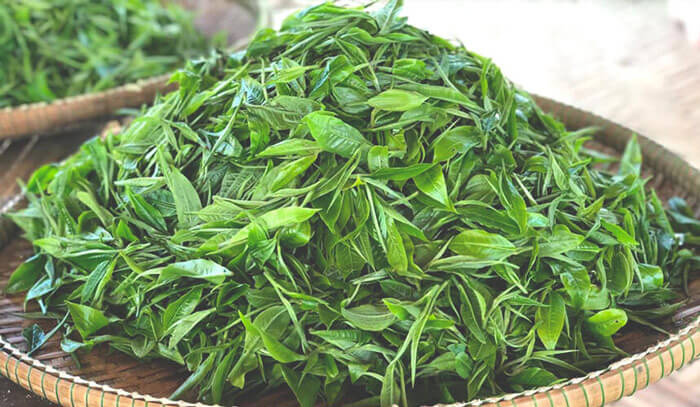
Tea is a leaf harvested from a tree called the tea plant, or Camellia Sinensis. Many varieties of this Camellia Sinensis exist, giving each a different typicity and profile. The young shoots as well as the bud are harvested as they grow, then processed. Different processes exist, giving what are called the colours of tea (white, green, blue-green or oolong, black, dark, and more rarely yellow).
The variety of the tea plant, the terroir, the harvest period and the processing are all factors that influence the characteristics of the final tea. The plant, the earth, the climate and people are therefore at the heart of its quality.
You understand why there is not one tea but many teas. The work of selection and sourcing is therefore essential.
The search for teas and their selection depends on the desired varieties and the target market.
Indeed, the tea-bag industry, for example, whose sales network is large-scale retail, looks for teas with a “standard” profile and above all a perfectly constant one. Whatever the moment or even the place, the tea bag must always have the same colour, the same taste. The aim is therefore to select a simpler profile, without complexity, to blend a large number of origins in order to compensate for supply problems or profile variations.
The objective is to have a stable colour, a present structure and very discreet aromas coming from powdered or very broken tea leaves.
When it comes to specialty teas, premium teas, as we offer at nunshen, the objective is different. The purchase volumes are smaller. In this range, we want to showcase the richness of the tea leaf more, and seek, on the contrary, to highlight its complexity and its singularity. The aim is to showcase the leaf and the people who work for its quality.
This motivates us to always be on the lookout, always searching for new varieties, beautiful typicities, little treasures.

It is very important to go on site, to meet the producers, to spend time with them to understand their work, to listen to their difficulties and to grasp the typicity of the teas they produce. It also makes it possible to verify that they respect an ethic in line with nunshen’s specifications. More than simple suppliers, they are partners with a strong bond of trust and, for some, even become true friends.
The selection of teas is daily work. It feeds on contacts, encounters, research but also on the multitude of tastings. It is indeed the best way to understand and control the quality of a tea, to validate its selection or not.
Sourcing therefore requires a great knowledge of tea, a mastery of tasting, a knowledge of the market and of customers’ needs.
Important for the sourcer and for the producer!
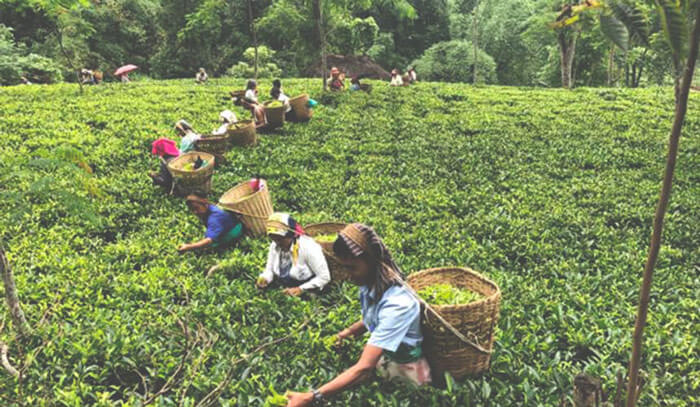
The harvest periods of the tea leaves are linked to the climate. They are set by the seasons and vary according to the regions of the world. The harvests are very intense during certain periods of the year, such as the monsoon, when humidity and heat are extreme, or, on the contrary, stopped during winter because the combination of temperature, light and humidity is not right for the leaf to keep growing. It should also be noted that the monsoon harvest is not a renowned harvest. Because they grow too quickly, the leaves are low in compounds and give very flat teas.
The first harvests of the year, during spring, are highly prized harvests. Why? Because the young shoots are much more concentrated in compounds than the other harvests of the year, giving very intense, very rich, very complex teas.
These “first-flush” teas represent great value for the farmers and a nectar to savour for the consumer.
While the spring selections are made partly on site, the pandemic and lockdown forced us to adapt and adjust our working methods. I was due to spend more than a month between India, Nepal and Vietnam, from March to April… and in the end it is from home that I am making the selections this year.
“The tea market is not escaping the impacts of the coronavirus pandemic. Indeed, leaf-picking activities are heavily disrupted by the restriction or lockdown measures applied at major suppliers,” explains the Ecofin agency.
“In India, for example, the leading producer of black tea, the harvest is expected to drop by 120,000 tonnes in 2020 due to the unavailability of labour to collect the leaf in the fields.”
I am in daily contact with the producers with whom we usually work, to be informed of the situation on their side, to exchange, and to support them too, because the situation is unprecedented and difficult.


Each case is different, depending on the country of origin, the region but also the structure in which people work. In the biggest gardens, the pickers do not have, or did not have, permission to work, while some family gardens manage to harvest and process while staying within the family. But the difficulty then comes for sending the samples and delivering the orders.
I manage to receive our producers’ samples regularly. Those from China and Vietnam reach their destination more quickly. For India it is gradually resuming, while Nepal is still in lockdown.
Privileged contacts with the producers are more important than ever, both to continue selecting good tea and to bring them our support.
Let’s keep drinking good tea to support those who live from its cultivation!